
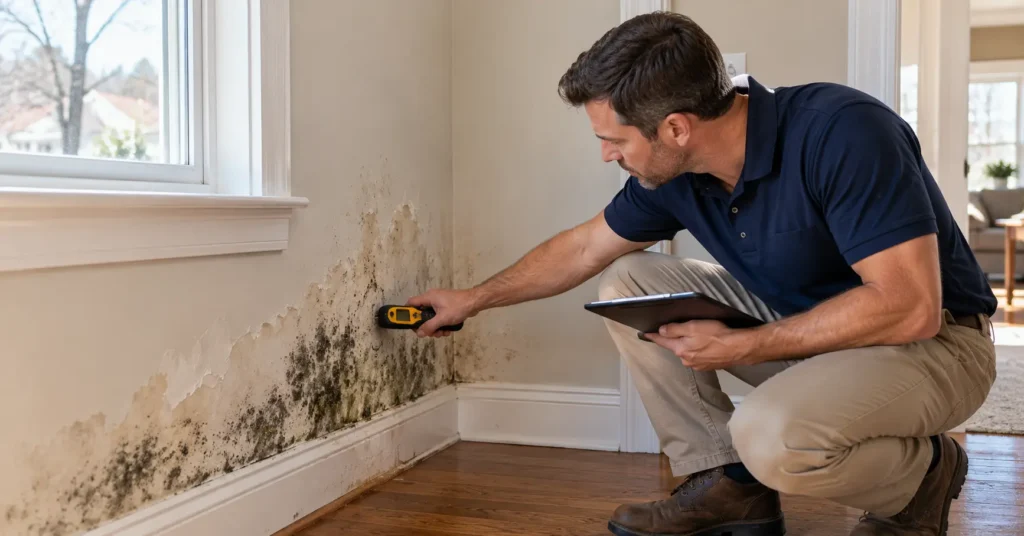
Mold damage can create costly repairs and complicated insurance coverage questions for Rhode Island homeowners. Understanding how mold develops, what your policy may cover, and how to document the damage can help protect your property insurance claim.
Does Homeowners Insurance Cover Mold Damage in Rhode Island?
Discovering mold in your home can be concerning, especially when it develops after a plumbing leak, burst pipe, or another unexpected water loss. Unfortunately, mold damage insurance coverage is not always straightforward.
Many homeowners insurance policies provide limited mold coverage when the damage results from a covered event. However, gradual leaks, ongoing moisture problems, and maintenance-related conditions may be excluded.
If you’re filing a mold damage insurance claim in Rhode Island, understanding the source of the moisture is an important first step.
Common Causes of Mold After Water Damage
Mold can develop when moisture remains trapped in building materials. Rhode Island’s humid summers, coastal conditions, and cold winters can contribute to moisture-related problems.
Common situations include:
- Burst or frozen pipes
- Plumbing leaks behind walls
- Appliance failures
- Roof leaks
- Storm-related water intrusion
- Water-damaged insulation
- Moisture beneath flooring
Mold after water damage may not become visible immediately. Hidden moisture can affect drywall, insulation, subflooring, and other materials.
Learn more about our residential water damage claims services.
Why Mold Insurance Claims Get Denied
Insurance companies often investigate mold claims to determine whether the underlying moisture damage resulted from a covered event.
Common reasons for disputes include:
- Long-term water leaks
- Maintenance-related moisture
- Delayed reporting
- Insufficient documentation
- Policy exclusions
- Mold remediation coverage limits
A denied mold insurance claim in RI does not necessarily mean every aspect of the underlying water damage is excluded. Coverage depends on the policy and circumstances.
How to Document Mold Damage for an Insurance Claim
Proper documentation helps establish the condition of the property and the extent of the damage.
Important Documentation to Gather
- Photographs of affected areas
- Evidence of the original water loss
- Plumbing or contractor reports
- Moisture inspection findings
- Mold assessment reports
- Repair and remediation estimates
- Emergency mitigation receipts
- Insurance company correspondence
Avoid disturbing suspected mold unnecessarily. Qualified professionals should evaluate significant contamination and recommend appropriate remediation.
How a Public Adjuster Can Help With Mold Damage
A mold damage claims adjuster representing the policyholder can help evaluate property damage, organize supporting evidence, and communicate with the insurance company.
A public adjuster for mold damage may assist with:
- Reviewing policy provisions
- Documenting water-related property damage
- Evaluating repair estimates
- Organizing claim documentation
- Identifying disputed damage
- Negotiating covered property losses
Because mold often develops following water intrusion, proper documentation of the original water damage is essential. Learn how our Water Damage Public Adjuster services help Rhode Island homeowners document property losses, navigate insurance claims, and pursue fair settlements.
At L & M Public Adjusters, we represent Rhode Island property owners, not insurance companies.
Get Help With a Mold Damage Insurance Claim in Rhode Island
Mold damage can complicate an already stressful property insurance claim. Accurate documentation and a clear understanding of your coverage are essential.
L & M Public Adjusters helps Rhode Island homeowners navigate water damage and related property insurance claims.
Learn more about our Rhode Island public adjuster services or contact our team to discuss your claim.
Frequently Asked Questions About Mold Insurance Claims
If you have questions about mold damage insurance coverage or an existing claim, contact L & M Public Adjusters to discuss your situation.
Is mold damage covered after a burst pipe?
Mold resulting from a covered burst pipe may qualify for limited coverage, depending on policy provisions, exclusions, and remediation limits.
Can a public adjuster help with a denied mold claim?
A public adjuster may review the property damage, policy information, estimates, and supporting documentation to determine whether additional claim assistance is appropriate.
Does insurance cover mold removal?
Some policies provide limited mold remediation coverage following covered water damage. Coverage amounts and conditions vary.